
Modern education has failed us and AI is not the culprit
How I joined a design masters and left after 3 months

I joined a design Masters at Central Saint Martins at 36 after leaving my decade-long career at Google. Getting into one of the best design schools in the world, I thought I was finally actualising my dream. I thought these were going to be the best years of my life.
I left after three months.
This is not only an article about how disappointed I feel towards education, but about how modern education has failed our society and trampled the hopes of our younger generations.
I received most of my education in Hong Kong. Hong Kong is one of those places with some of the highest-ranked schools in the world, but also notoriously known for how stressed its students are. From a young age I was taught to study for high exam scores, which would then get me into the best degrees at university and the best jobs after that. There are even schools designed specifically for acing exams.
When I was in secondary school, I had a conduct incident once, and instead of anyone helping me work through it, my discipline teacher told me “you would have been expelled if your academic results weren’t as good”.
I became really good at acing that formula. After the conduct incident I worked harder than ever on my exams. I got the best results in my school in public exams, got into the most prestigious programme in the best university in Hong Kong, and landed one of the highest-paying graduate jobs at the government. Did it get me the “resources” in society as promised? Perhaps. Did I learn anything during these years at school? Barely anything, except how to practise with past papers, memorising question patterns, drilling answers until they stuck.
That’s how toxic it was, and it’s even more toxic today. Kids in nursery these days attend 20+ extracurricular activities every week to build their portfolio for primary school interviews.
But I thought perhaps it was just a Hong Kong thing.
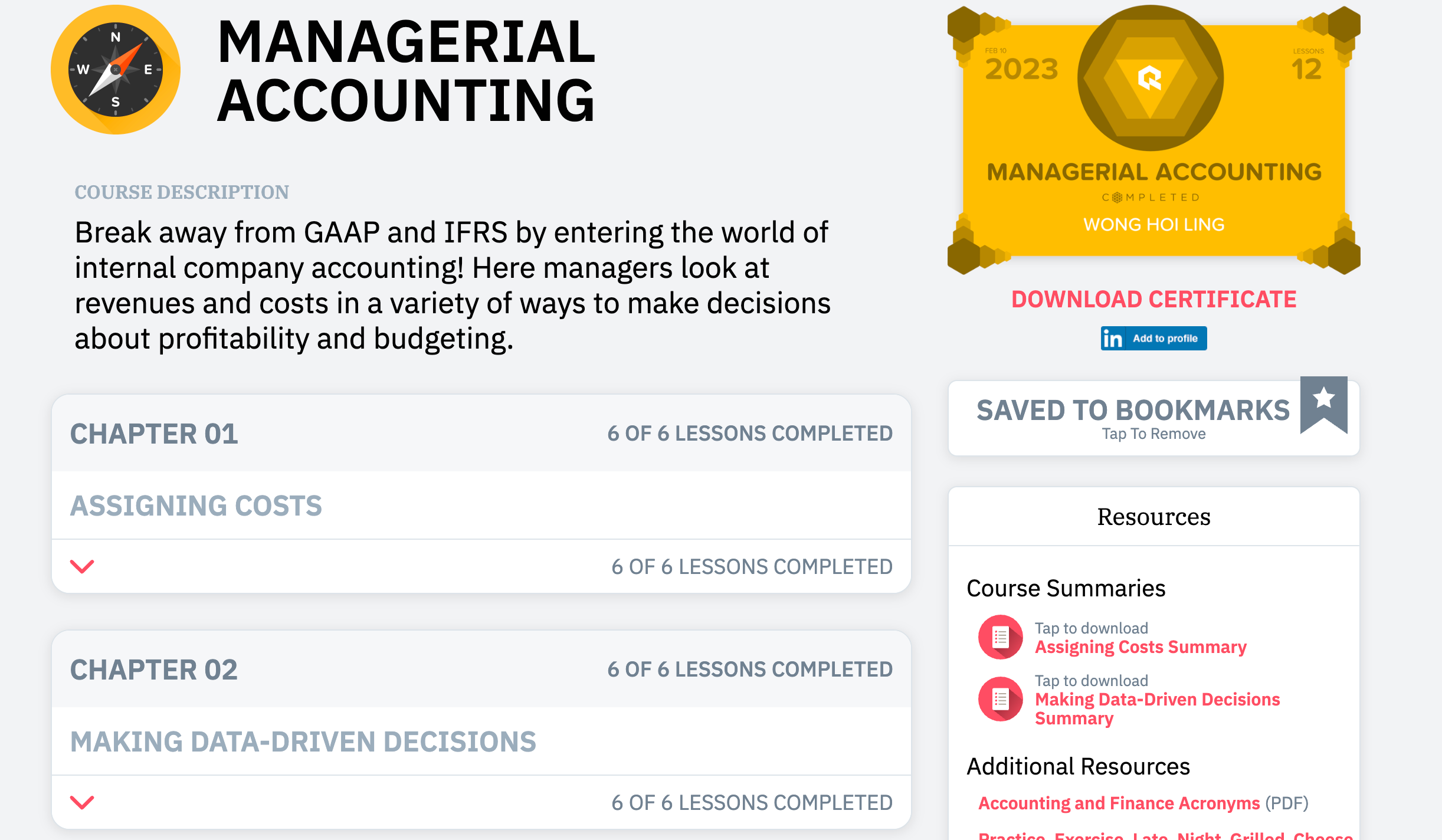
I never gave up my fantasy about education. So when I was at Google and pregnant with my first child, I enrolled in an online EMBA with Quantic, which was highly recommended by my colleagues. The fact that it was an online programme fit my schedule perfectly. I just wanted to learn at my own pace, to equip myself with something meaningful. And while the programme was efficient in format, it felt no different to a Duolingo in business costumes. The information was theoretical. I wasn’t able to get real feedback from academics. The peer connection was absent, as expected. I still didn’t feel inspired after all.
I told myself perhaps it was the format. In-person schools had to be different.
So that is how, after a decade at Google, I left to join a Masters at Central Saint Martins. My goal was simple: to maximise learning, which is always a very important part of who I am. Design has always been one of my deepest interests, and CSM was a dream school. I started in September 2025 convinced these would be the best years of my life.
I left three months later.
I was envisioning an inspiring environment where I would be surrounded by talented people, where I could pivot to design and figure out where I wanted to go next. The reality was nowhere close. I could go on and on, but these were my observations:
There was minimal teaching or intellectual exchange on design. Lecture time was used for admin and very basic one-way sessions: “how to access the library”, “what is design to you roundtable-and-finish”, “how to build your portfolios”, “choose your next project”
Students were expected to pick up knowledge on their own, mostly from the technicians in workshops, but software isn’t sponsored and technicians are shared across the whole school, meaning they have very limited time for any one student
Many teachers have their passions drained. A lot of the tutors are unpaid, but here for the brand name. They don’t love giving feedback, framing it as “not wanting to harm your creativity”, yet in the only 1 workshop with industry professionals, the person told me how graduates aren’t prepared for the real world because they have no idea about industry constraints
This is a systematic issue and a by-product of bureaucracy and it’s difficult to address. I spoke up about the situation, I talked to my peers, but nothing changed. The course leader’s energy was pouring into student admissions, which was the main KPI. The school’s admin team never bothered, and six months later I still haven’t heard back from anyone. And most pathetically, the students, most of whom had just graduated from their bachelor’s degrees, were aware of how dissatisfying the situation was, but thought there was nothing else they could do.
Because everyone told them they need that certificate.
Because everyone told them they need that school name.
Because everyone told them only these will bring them a job, which is what they are supposed to do to make contributions to society and be free from whatever challenges adulthood brings.
Not knowing that the bubble has already burst.
Universities and grad schools have become machines that sell hope in exchange for profit. Universities recruit international students aggressively because they pay several times what domestic students pay. The MBA is one of the most expensive postgraduate courses on the market, partly because of the higher average salary in the industry. The EMBA goes even higher, because it is often sponsored by companies. And for that hope, parents work extra jobs to save up money for their kids’ future. Students take on massive loans hoping that things will pay off eventually.
Yet people are now realising that these dreams are built on thin fabric. In the UK, graduate positions fell 33% in 2025 alone, the lowest since 2018, while students leave university carrying an average of £46,000 in debt. In the US, nearly half of all recent graduates are working jobs that never required a degree. A lot may say AI is causing all this chaos, but most of it was happening long before AI became mainstream. And even now with all the disruption AI is causing, schools are doing the bare minimum to evolve their curriculum.
My course leader kept saying “ChatGTP” having never really worked with AI. The school’s mentorship programme manages to match just 50 students a year “because they are matching manually, one by one”. AI or school: which one is worse?
And what pissed me off the most was how these people with vested interests were continuing to paint that glossy, broken picture for students. In recruitment talks they claimed the cohort was “diverse” when over 80% come from China (I don’t have issues with Chinese students but the point is the false promise). In lectures they talked about how many graduates secured placements without mentioning that all of them were unpaid. In practice they never gave feedback, because they themselves were disconnected from the workforce, aside from the fact that they didn’t care.
But AI is going to disrupt traditional education. Alpha School in the US is teaching core academic subjects in two hours a day using AI, with the rest of the day dedicated to life skills, real projects, public speaking, and financial literacy, guided by coaches rather than teachers. Students are realising that a graduation certificate does not guarantee anything but debt. AI is enabling learning at exponential speed, offering cheaper and more accessible ways to learn, for people rich or poor.
And I really hope AI will disrupt education.
Because education, real education, is something different from all of this. It should be accessible to all. Educators are supposed to inspire people to pursue knowledge, to find their purpose and identity in society, and to develop their potential to make the world a better place. Yet the whole industry has become rotten at its core: an in-group game that extracts money from the people who can afford it, locks out the people who can’t, and uses those connections to extend its power through every layer of society so that the game keeps going.
If you are younger than me and you have felt let down by a system that promised you something and didn’t deliver, I want to say this clearly: that is not your failure. You were sold a story by people who are obsessed with maximising their wealth at the cost of future generations. The story is collapsing, and the collapse is not yours to carry.
I hope I am biased. There are certainly good schools in the world but I am going to stop trying for now. I will never give up learning. But AI has given me tremendous opportunities to learn. I can access all kinds of knowledge, learn by doing, build in public, go for apprenticeships, connect with people, go to workshops and talk to people.
That’s a lot better than paying hefty fees for a piece of A4 printed paper.
I know this might be a hot take for a lot, and I would love to be challenged. Tell me how your experiences with education; good or bad, and how you are thinking about education in the future!
About me
Thanks for reading. I’m Loretta, a wildcard obsessed with personal growth and creating impact in the world. I spent two years in policy and a decade at Google helping businesses to grow, and now I mentor, create, and build things on my own terms.
I write weekly about insider perspectives, career pivots, identity, and introspection. If this resonated, you’re in the right place.
If you’d like more personalised guidance on career, business, or figuring out your next move, book a free intro call below.