
What Does a Google Account Manager Actually Do? An Insider View
For brand owners and anyone interested in understanding how things work from the inside

I started my first job at Google as an account manager, and spent more than half a decade there in that function across different organisations, markets, and seniority levels. Over the years, and even until now, I hear the same myths come up all the time: that account managers are only there to push new Google products on you, that they exist to grow your ad spend rather than your business, that you need to pay for the insights they offer.
None of that is quite right.
This article is for two types of people. First, anyone curious about how Google works from the inside, whether you’re considering a career there or just want to understand the machine behind the ads. Second, business owners who are already working with a Google account manager and want to know how to get significantly more out of that relationship.
Let’s get into it.
The bigger picture: Google’s advertising powerhouse
Let’s start with some numbers that might surprise you.
In Q4 2025, Alphabet generated $113.8 billion in revenue. Of that, $82.3 billion came from advertising. That’s roughly 72% of everything Alphabet earns in a single quarter, from one product: Google Ads.
Behind that number is an enormous sales and account management organisation. If you run a business, there’s a 90% chance you’ve used Google Ads at some point, and at some point you’ve likely interacted with a Google account manager too.
To support so many advertisers, Google’s advertising organisation is structured into dedicated teams. Each team focuses on a different segment of the market, and each has its own account managers responsible for those relationships. Google Marketing Solutions covers small and medium-sized businesses; Large Customer Sales handles bigger companies with larger advertising budgets, typically organised at a country or regional level; and there is also a smaller, more selective team working with a handful of globally significant businesses that partner with Google across multiple products, not just advertising.
Each of these organisations has dedicated account managers. Usually, the smaller the average revenue of the portfolio, the larger the number of clients each account manager looks after. Portfolios can range from a handful of strategic clients to close to a hundred smaller accounts.
The job title itself varies depending on the organisation, the team, and the individual’s focus. You might see roles called Account Strategist, Account Manager, Industry Manager, Industry Partner, or Growth Manager. They are all variations of the same fundamental function.
I started more than 10 years ago as an account manager for small businesses, and moved into mid-market sales managing larger customers, coached teammates and supported hiring. After a period away from the advertising organisation, I returned as a Growth Manager focused on app developers, and eventually moved into partnerships. Account management was the foundation for all of it.
So what does an account manager actually do?
Here is where the biggest misconception lives.
Most people assume a Google account manager spends their time building campaigns and optimising keywords. That’s completely not the case.
Account managers’ ultimate goal is to grow Google advertising revenue, but we do that not by literally pushing customers to increase their budget, but by helping them succeed in their business goals. The logic is simple: ad spend is always going to be a fraction of a company’s overall marketing budget, which comes from business profit. If the business grows, the budget grows. So instead of obsessing over the platform, a good account manager focuses on the business.
In practice, this is how they help:
With day-to-day counterparts (digital marketing managers): performance reviews and benchmarking, troubleshooting, updates on new product launches and betas, and running training sessions to keep the team up to date.
With customer leadership (CEOs/CMOs): this is where the role starts to look more like consulting. After understanding their priorities, an account manager may put together different analyses or resources. Examples include a market analysis for a new expansion market, creative ideation support for a product or brand launch, or a competitive landscape analysis benchmarking performance against industry players. To do this well, account managers draw on internal Google resources: data, research tools, and specialists like data analysts or insights managers.
At the end of the day, what actually gets offered to a given customer depends on the account manager’s bandwidth and the strategic importance of that company to their own targets, which leads us to the next section.
Therefore, myth-busting here: account managers do not build or manage your campaigns directly. The actual work of building campaigns, optimising keywords, and adjusting bids is still performed by the customers or their agencies. But account managers provide advice on performance and optimisation.

What does the day-to-day of an account manager look like?
Honestly, it depends on the exact role, but here are some high-level patterns you’ll notice:
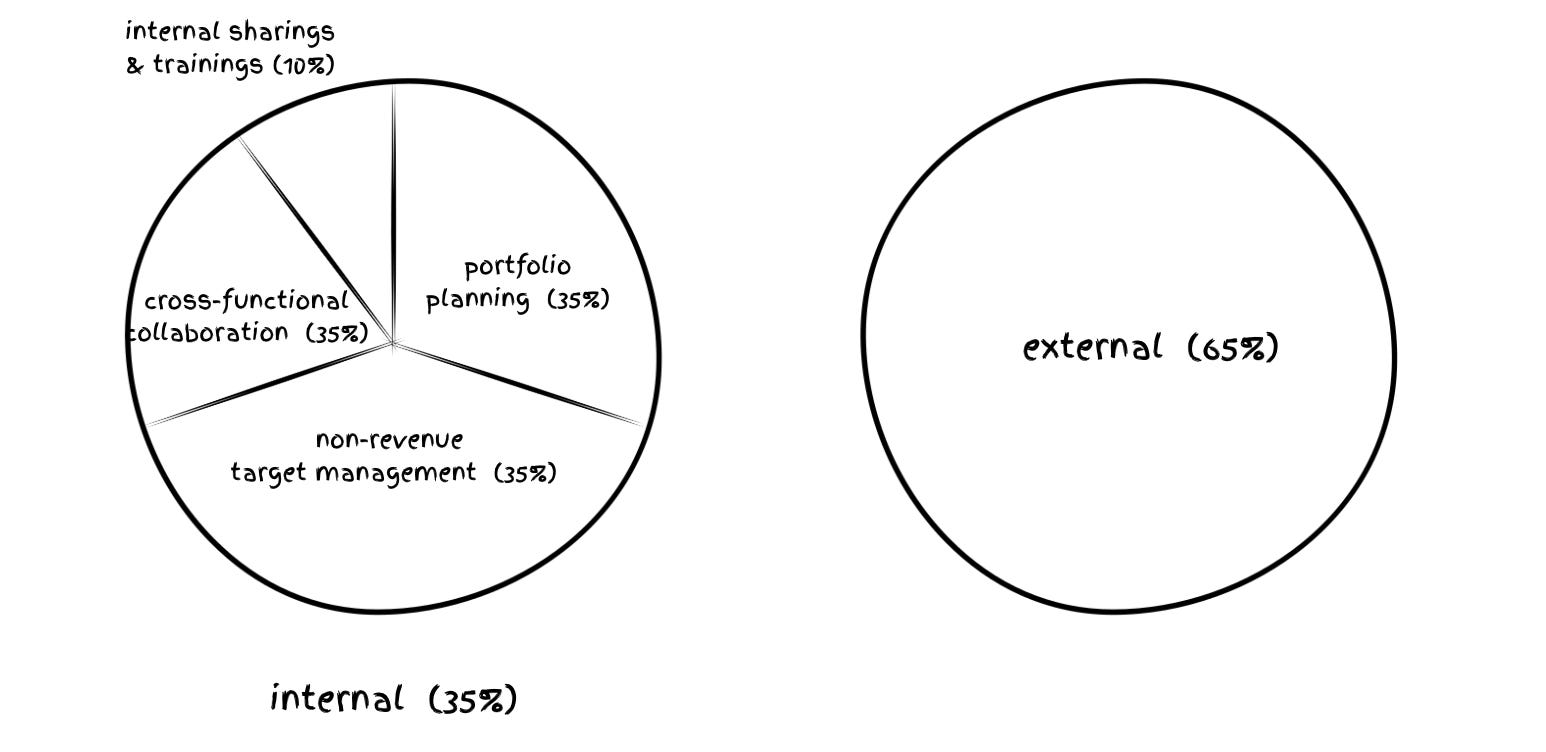
Internally, a lot of time goes into planning. Account managers have revenue targets set across their whole portfolio on a quarterly basis, which means they have to regularly prioritise where they spend their time, based on revenue size, growth potential, or strategic importance.
Beyond revenue, account managers are usually assigned specific product or initiative focuses each quarter, such as driving adoption of a new ad format or communicating a major policy change to customers. Getting those messages to the right people takes preparation, training, and internal coordination.
There is also a regular cadence of industry events and partner programmes, where account managers work with the marketing team and Google leadership to nominate customers and participate alongside them.
Aside from regular 1:1s and team meetings, there’s also plenty of internal knowledge exchange. Google is known for its collaborative culture, and there’s a lot of peer learning from colleagues covering the same verticals, in other regions or teams, or even from other Google products like Google Cloud, YouTube, and Play. These connections help account managers build a more holistic view, which ultimately makes their advice to customers more useful.
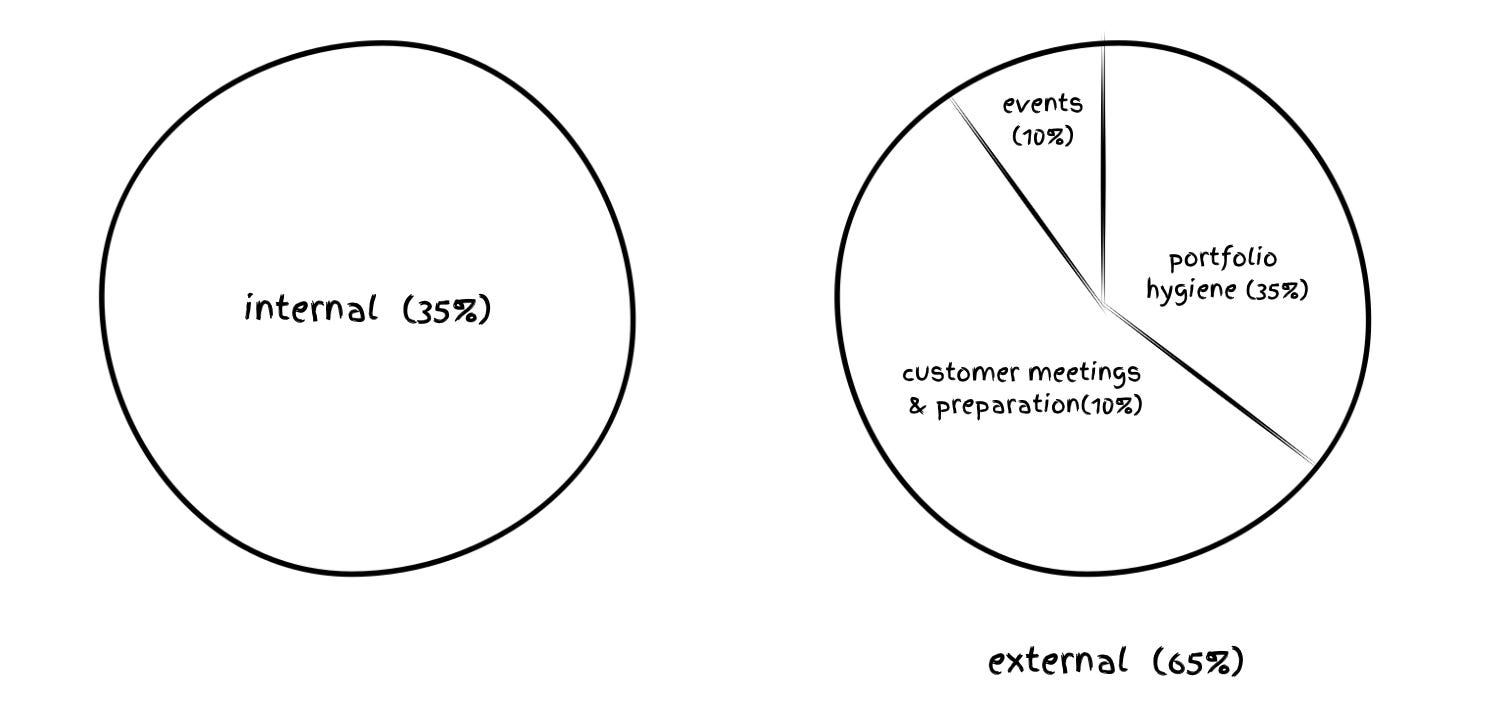
Externally, a portion of the time goes on what I’d call hygiene: answering customer questions, troubleshooting campaign issues, keeping things moving.
Beyond that, most time is spent on account planning and quarterly business reviews. When I was an account manager, I always aimed for at least one substantive meeting (1-3 hours) with each customer per quarter. These meetings are preferably in person, and a huge portion of time goes into preparation: agreeing on the agenda, confirming who’s in the room, pulling and analysing performance data, and turning the insights into a presentation for the audience. In many ways this is consulting work. You are constantly trying to understand customer challenges, figure out solutions, and influence decision makers to move the needle.
How to work with your account manager
This is the section all brand owners need to read.
Most people don’t realise this: getting account management support from Google is free. It activates once your account hits a certain spending threshold, which is the case for most active advertisers. You can enable this in your Google Ads account settings to start receiving outreach from your account manager.
The resources available through this relationship are significant. Insights, data, and analysis you genuinely cannot get anywhere else. Most companies leave a lot of this on the table. Here’s how I’d recommend working with your account manager:
1. Take time to understand each other. Like any good working relationship, this one starts with genuine curiosity. Your account manager has their own targets. Their portfolio size, the type of customers they manage, and the team they’re in all affect how much time they can give you and what their quarterly focus is. Ask them directly. When you understand what they’re being measured on, you can look for real alignment, areas where helping you also helps them. That’s when the relationship really starts to work.
2. Ask for what’s available. Account managers don’t always volunteer every service they can offer, as they don’t want to overcommit. Ask. Specifically ask about beta product sign-ups, market insights reports, and any data or research they can pull for your category. These are internal Google resources. They’re free. And they’re often genuinely useful in ways that go well beyond advertising.
3. Identify mutual benefits. Once you’ve built some trust, think about how your company’s objectives can connect to what they need to show internally. Whether that’s being a visible revenue story, trialling a new product, or signing a Joint Business Plan, things that help your account manager can often align with your own business goals.
4. Think about events and training. Account managers have access to industry events, partner programmes, and training resources that most advertisers don’t even know exist. Google Marketing Live, Google I/O, regional industry summits, Game Developers Conference. These are real opportunities for your team’s learning, your company’s visibility, and your personal brand. When I was an account manager, I would invite customers to participate in events and trainings roughly once a quarter. Some of those became speaking opportunities, press coverage, and introductions to other Google partners. Ask your account manager what’s coming up.
Obviously, across different teams, regions or even verticals, the account managers may work differently. But the support is free, and the resources are often more valuable than most people treat them. You just need to know how to use them.
What I loved about being an account manager
The thing I valued most was the sheer breadth of exposure.
Over my time in account management, I worked with companies of all sizes, from local small businesses to global names like Disneyland, Revolut, Warner Brothers, PepsiCo, and Pfizer. For most companies you’ve heard of, I’ve either worked with them directly or had colleagues who did. That kind of exposure to different businesses is gold.
Business acumen. I got a front-row seat into how very different businesses operate, where they struggle, and what separates the ones that grow from the ones that stagnate. And more importantly, I got to influence those businesses directly.
Relationships. The professional network I built through this role is global and deep. Working with everyone from C-level executives to junior marketing managers opened up massive professional opportunities in the industry, and many of them became personal friends.
Skills that transfer. A huge part of this job is consulting: taking complex problems, finding the insight, and presenting recommendations that actually change what someone does. That builds your communication, your ability to work with data, your project management instincts, and your comfort with public speaking, all skills that carry into almost any career path.
What I didn’t like
The job is rarely boring, and honestly I couldn’t complain too much. But over the years, a few things became harder to ignore.
More process, less autonomy. When I started, account managers had more direct influence across the companies they worked with. As the organisation grew and more layers of management were added, that got more complicated. Getting things done requires more process and more sign-off. This is true of large corporations, and Google is no exception.
Performance management overhead. Alongside revenue targets, account managers typically have product adoption targets to hit, tracking how many customers are using particular features or formats. While the intent is reasonable, it translates into a lot of administrative work that in my opinion is not the best use of an account manager’s time.
The internal storytelling tax. Google has an amazing culture, but it is also an American company where career progression depends heavily on your ability to build a narrative around your work. In practice, a meaningful chunk of time goes not on customers, but on writing up customer stories, documenting impact, and making the case for your own contribution.
Account management at Google is a genuinely interesting role. The title sounds administrative, but in practice it involves consulting, sales, community training, and project and event management, often all at once.
Of course, like every job, there are nuances, and the day-to-day varies by team, function, and organisation. But this is still a role I’d highly recommend for anyone keen to learn about business and build real connections. If you’re thinking about applying for a role like this, or any role at Google, check out my earlier article below. It covers everything from identifying the right opportunity to what actually moves the needle in an application.

I want to hear from you. How’s been your experience working with your account manager at Google? Reply to this email or leave a comment - I read and respond to every message.
My content are free - if you find it helpful, subscribe and consider buying me a coffee ;)
About me
Thank you for reading until the end :) I’m Loretta, and I’ve spent the past decade at Google growing thousands of companies of all sizes globally. My work spans digital marketing, business transformation, strategic partnerships, program management, and app development.
I believe AI will empower individuals more than ever, and I’m here to translate my decade of experience into simple, actionable advice to help you achieve your goals. I post bi-weekly about digital marketing tips, industry updates and best practices.
Want more tips like these? I offer 60-minute strategy sessions to help founders scale their businesses, or cover specific challenges such as career development, getting into tech etc. Book a free introductory call below.
And if you still haven’t, check out my free Ultimate Digital Marketing Metrics Glossary 2025, Complete Guide to Google Search Campaigns 2026 and Beginner’s Guide to Digital Marketing Strategy.